
For years, advertising has not only promoted brands and products, but it has also encouraged stereotyping that has had an impact in the way we view certain people. Each culture and race has a stereotype they are known for, whether it is good or bad, in the end these stereotypes end up generalizing people. Advertising has created a society that overlooks a person for who they are and defines someone by the way they appear.
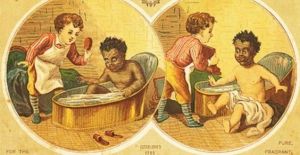
In the soap advertisement above it shows an African American child being cleaned with soap turning him white. This was a racially inappropriate way of stereotyping that could impact African Americans. This could potentially make people believe that they are dirty human beings. Young children still developing can have the wrong idea when exposed to these ads. An article states that “by watching members of their own and other races perform activities, children learn what is expected of them (or not) and what they can and cannot expect from others.” As these kids grow older and develop, they grow into believing stereotypes that are shown on advertisements and possibly go on to offend people. These advertisements are not just a thing of the past, but also something that happens even today.

This is a more recent advertisement stereotyping women as maids for a Mr. Clean ad. Women especially are constantly presented as weak and as servants of the house which negatively impacts them. A research states that “exposure to stereotypical images leads to the reinforcement of gender role stereotypes for both males and females.” Advertisers have ethical responsibility to break away from stereotyping to not offend anyone or build upon these stereotypes that generalize genders, cultures and races. Airing these ads only causes reinforcement of these stereotypes, no matter if they are positive or negative generalizing should be avoided to help stop these false assumptions.
 Adv91PulidoRuby